Smart personalisation
Targeted content delivered dynamically, shaped by user needs and context
A human-centred approach that saved 2,000+ hours, supported 79 unique journeys, and quietly became something no competitor had built
The client needed to save time
Hundreds of relocations a year: the same meetings, the same information, and the same hours being burned by a small HR team doing things that didn't need a human
The obvious answer was a static site with a few videos
Efficient. Tidy. Done
The obvious answer would have failed
Professionals relocating internationally don't engage with tools that feel built for HR's convenience. They engage with things that feel built for them. Something that looks like it was made to save time gets treated like something made to save time: skimmed, ignored, abandoned
Relocating to a new country is already full of uncertainty and generic content doesn’t reduce this
The real brief wasn't ‘build an onboarding tool’
It was ‘build something so good that time-poor executives choose to use it’
Splitting content by role felt like the next move. But that still meant clicking ‘Project Manager’ and watching your assigned content
Functional, but dry
What if onboarding worked more like a choose-your-own-adventure book?
Not a menu, not a category, but a journey that felt personal because it reflected your situation, without asking you to define it yourself
That idea exploded the scope almost immediately. Mapping every possible path through the experience revealed nearly 80 unique journeys. Each one with its own logic, its own overlaps, its own edge cases
This was going to be bigger than anyone had planned for
Every employee got something that felt made for them. Because it was.
Just without the operational cost of building 79 things from scratch
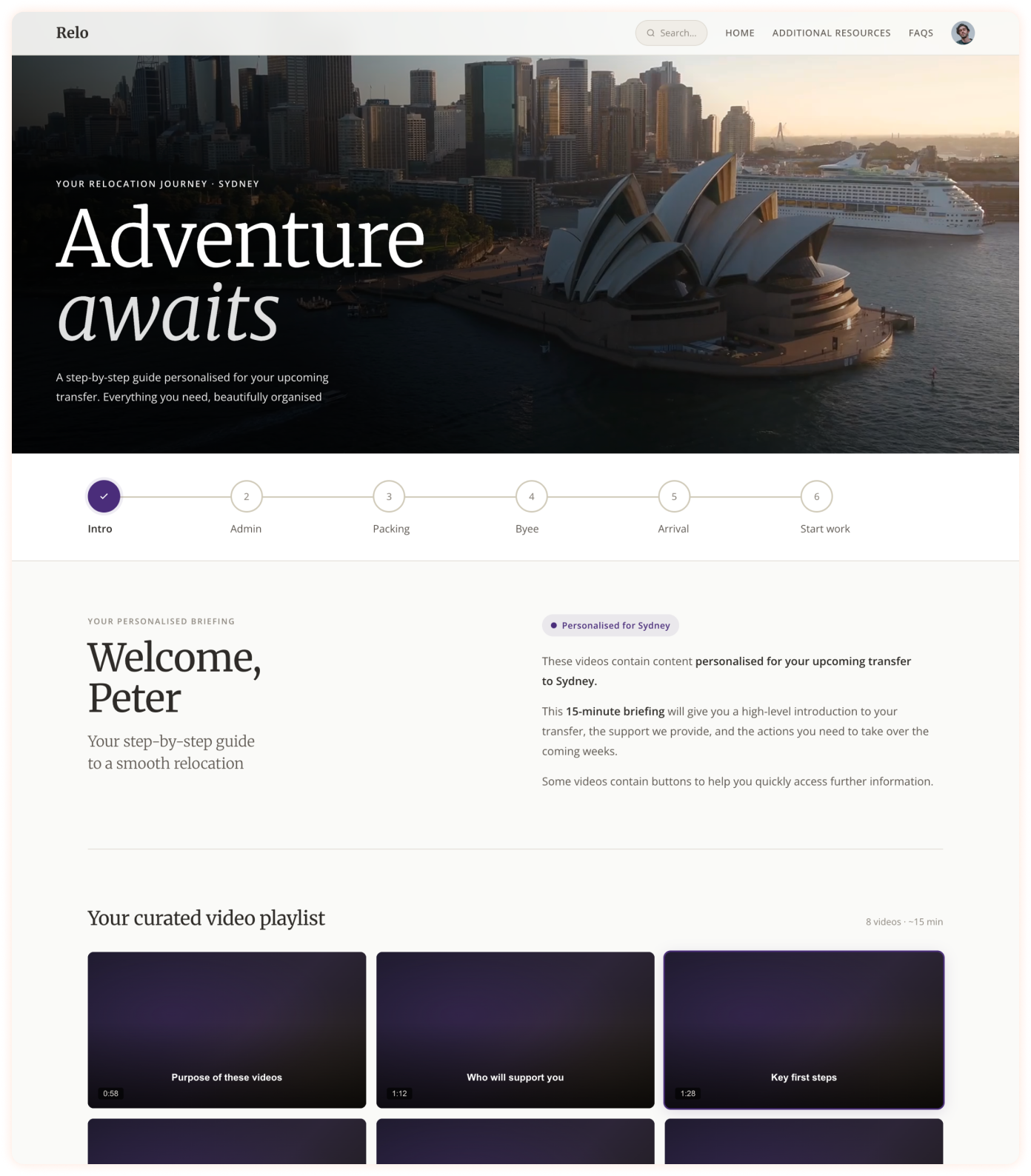
This had potential far beyond the original brief: a global solution that could scale across the business
Different teams started seeing different possibilities
Which meant nothing could be baked in. Legal and financial content changes. Regional policies vary. Voiceovers needed to flex without reshooting everything
AI-generated voiceovers made the content modular and maintainable. Every piece of the system was designed to be swapped, updated, and scaled without rebuilding from scratch
Then IT security nearly killed it
The product didn't belong anywhere. It couldn't sit behind authentication as the infrastructure wasn't there. But it couldn't be open either. A casually curious internal user stumbling across it would undermine everything
The answer came late one night, from an unexpected place: a Google ad. Looking at the URL, something clicked
The URL could be the key
If the personalisation lived in the link rather than the system, there was nothing to protect. No personal data in the platform. No login to compromise. Without the custom URL, the tool showed nothing, because there was nothing to show
Despite delivering fully personalised content to each user, the system contained no personal information. It was essentially invisible without the right link
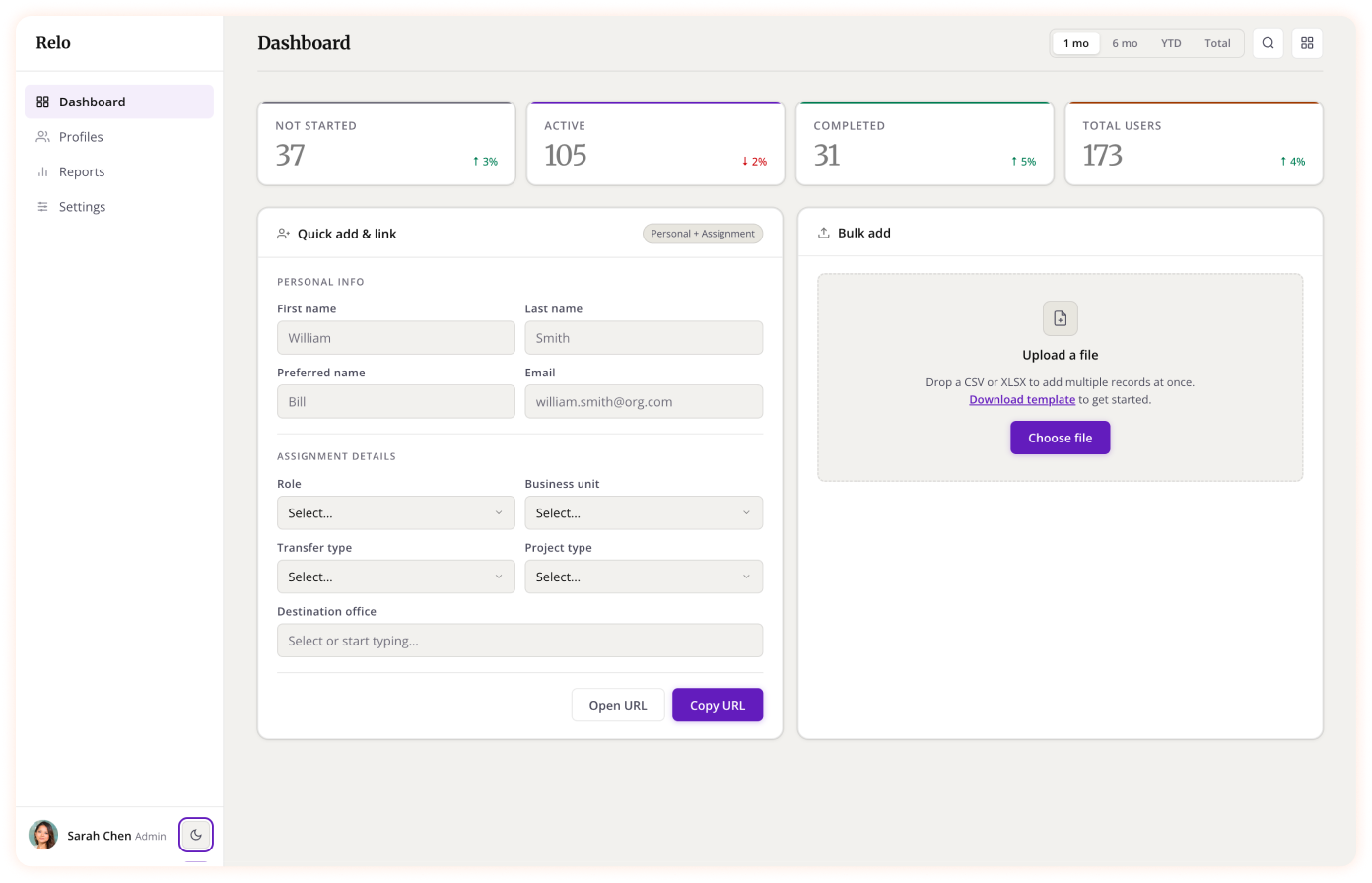
HR could generate a custom URL in seconds with just a few details entered into an admin panel. Then a link could be sent and a personalised journey unlocked
The operational lift that threatened to undo the whole point of the project was reduced to almost nothing
IT approved it
The equivalent of a full-time role, given back
2,000+ hours saved in the first year
The equivalent of a full-time role, freed from repetitive coordination and given back to work that actually needed a human
79 unique journeys. One system
Every person relocating received something that felt made for them, not processed by a department
100% positive feedback from users across every office
But the best moment came later, in a conversation with the client who'd commissioned it
She wasn't just satisfied with the numbers, she was proud
A tool built to solve an internal admin problem had quietly become something nobody else in the sector had thought to build
"Ian was able to simplify complexity into workable solutions, making collaboration easy, which is exactly what allowed us to achieve such an impact."
Targeted content delivered dynamically, shaped by user needs and context
HR team could create onboarding flows in seconds via internal panel
Personalised video journeys delivered via a consistent UX pattern
Embedded analytics revealed what worked, across people, content and timing
Scalable system supporting 79 personas, ensuring every employee received a coherent experience despite highly varied relocation scenarios
Guidance-first onboarding, helping users understand what to do and when rather than relying on opaque automation
Light personalisation over automation, making journeys feel tailored without becoming intrusive or overly complex
Scalable video content over hyper-specific journeys, allowing the system to support many destinations without creating hundreds of bespoke variations
Operational simplicity over runtime personalisation, reducing technical overhead and keeping the system easier to maintain
Flexible journeys over rigid destination content, so the same structure could support different relocation contexts without breaking the experience
Heavy personalisation that risked feeling artificial or intrusive during a sensitive relocation process
Automation that complicated the experience, where hidden logic could make journeys harder for users to understand
Speculative features like AI-driven onboarding, which conflicted with the considered, high-touch nature of a relocation service
The data was already there. The insight was knowing when and how to surface it
The URL solution came from a Google ad. Good solutions often already exist, they just need a different problem to solve
79 journeys sounds overwhelming. They weren’t, because the framework was right. Fit the journeys to reality, not the other way round
The format mattered because the content was personal